
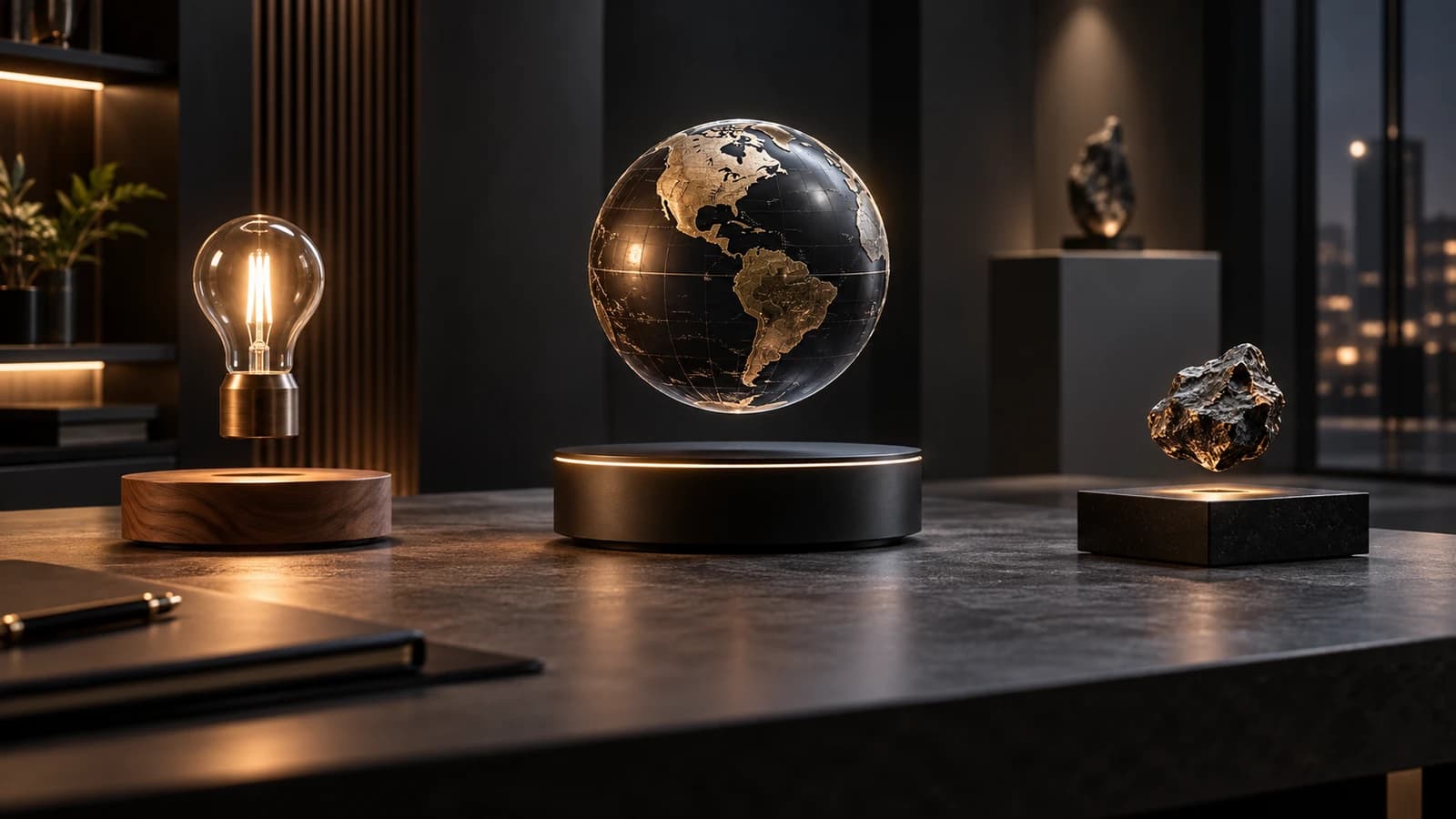
Direct Answer
Magnetic levitation is used to hold an object in the air without a visible stand touching it. In everyday products, the effect is most often used for floating lamps, desk objects, globes, clocks, collector pieces, and memorable gifts. In business, it is used to make one product easier to notice in a store, launch event, hotel, museum, exhibition, or branded installation. Industrial magnetic levitation also has more technical uses, but a tabletop floating display is usually designed for presentation rather than transport or heavy machinery.
The practical value is not simply that an object floats. Levitation separates an object from visual clutter, reveals more of its shape, and can add slow rotation. That makes it useful whenever attention, movement, or a sense of lightness supports the purpose of the object.
Magnetic Levitation Uses in Everyday Life
At home, magnetic levitation usually appears as a functional or decorative object. A floating lamp combines light with motion. A levitating globe can become a conversation piece on a desk. A clock or small sculpture can create a calm focal point without taking over the room. These products are chosen less for technical performance than for the experience they create.
The best home applications have a clear reason to float. Light can appear more atmospheric when the illuminated element is separated from its base. A globe benefits from being seen from every side. A small art object gains presence because the empty air around it becomes part of the design. If the effect does not improve how the object is seen or used, a conventional stand may be simpler.
Floating Displays for Shops and Product Launches
Retailers use magnetic levitation to identify a hero product. A fragrance bottle, collectible, model, limited-edition package, or lightweight product shell can be placed above a tuned base so it reads differently from surrounding merchandise. The movement creates a visual pause, while the clear air gap tells the viewer that this item deserves special attention.
The same idea works at launches and exhibitions. A floating object can anchor a small booth, press preview, or presentation table without adding another screen. It is especially effective when people need to understand one form, finish, or story quickly. AMO's guide to floating displays for perfume brands shows how this can work in a specific retail category.
Gifts, Collectibles, and Personal Objects
Levitation is useful in gifting because the recipient experiences a moment of discovery. The object must be positioned correctly, the field takes control, and the item begins to hover. That short interaction makes a globe, lamp, branded sculpture, or collector piece feel more memorable than a static desk accessory.
For a personal object, weight and balance still matter. A levitation base is not a universal platform that can lift anything placed above it. The floating part normally contains a compatible magnetic component and must stay within the platform's operating range. For custom gifts, the object and base are developed together so the experience feels intentional rather than improvised.
Hospitality, Museums, and Interior Design
Hotels, galleries, museums, and premium interiors use floating objects when they want a focal point without a bulky support. A hotel lobby might use a levitating lamp or sculptural object to create a signature detail. A museum may use controlled separation to increase curiosity around a replica, model, or specially designed exhibit element. Interior designers can use the same effect at reception desks, private lounges, and curated display niches.
These environments make reliability and visual restraint important. The system should suit the viewing distance, ambient sound, lighting, maintenance routine, and expected operating time. A floating effect that looks convincing on a small desk may need different proportions and engineering in a public space. Review AMO case studies to compare commercial settings before defining a project.
What Magnetic Levitation Is Not Best For
Magnetic levitation is not automatically the right answer for every object. Very heavy products, unstable shapes, items with a high or uneven center of gravity, and objects that must be handled constantly may be better served by a conventional plinth. Sensitive devices and magnetic items also require a compatibility review rather than an assumption.
It is helpful to separate display levitation from large industrial maglev systems. A tabletop base is optimized for a limited payload and a controlled gap. It does not provide unlimited lifting force, and it should not be treated as a general-purpose tool. The product instructions and specified payload always take priority over a visual demo.
Decision Checklist
Use this quick framework before choosing a levitating product or planning a custom one:
- Define whether the purpose is lighting, decoration, gifting, product focus, or a public installation.
- Check the object's total weight, dimensions, material, and center of gravity.
- Decide whether rotation improves the experience or distracts from it.
- Consider operating time, nearby objects, power access, sound, and daily handling.
- For a custom object, plan the floating part and the base as one system.
- Compare standard magnetic levitation products before moving into OEM and ODM development.
FAQ
What is the most common everyday use of magnetic levitation?
The most familiar everyday uses are floating lamps, globes, clocks, desk sculptures, and display stands. They use levitation to make an object more visible or enjoyable, not to carry heavy loads.
Where are floating displays used in business?
They are used in retail counters, launch events, exhibitions, hotel interiors, museums, reception spaces, and premium gifting programs. The common goal is to give one object stronger visual focus.
Can magnetic levitation be useful, not just decorative?
Yes. A levitating lamp provides light, a display can help explain a product, and a rotating floating object can reveal multiple sides without a visible support. The usefulness depends on the application.
Can any product be turned into a floating product?
Not automatically. Weight, balance, dimensions, materials, and the internal magnetic arrangement must be compatible with the selected platform. Custom engineering may be required.
Is magnetic levitation only for expensive projects?
No. Standard desk products can be accessible, while custom branded displays and installations cost more because they require design, sampling, tuning, finish development, and production control.
Next Step
Start with the result you want people to notice, not with the technology alone. If a standard lamp, globe, clock, or display base fits the purpose, explore the AMO product range. If the object, finish, packaging, or environment needs to be developed around a brand brief, share the intended object, dimensions, quantity, and use case through the request a quote page.