
Introduction
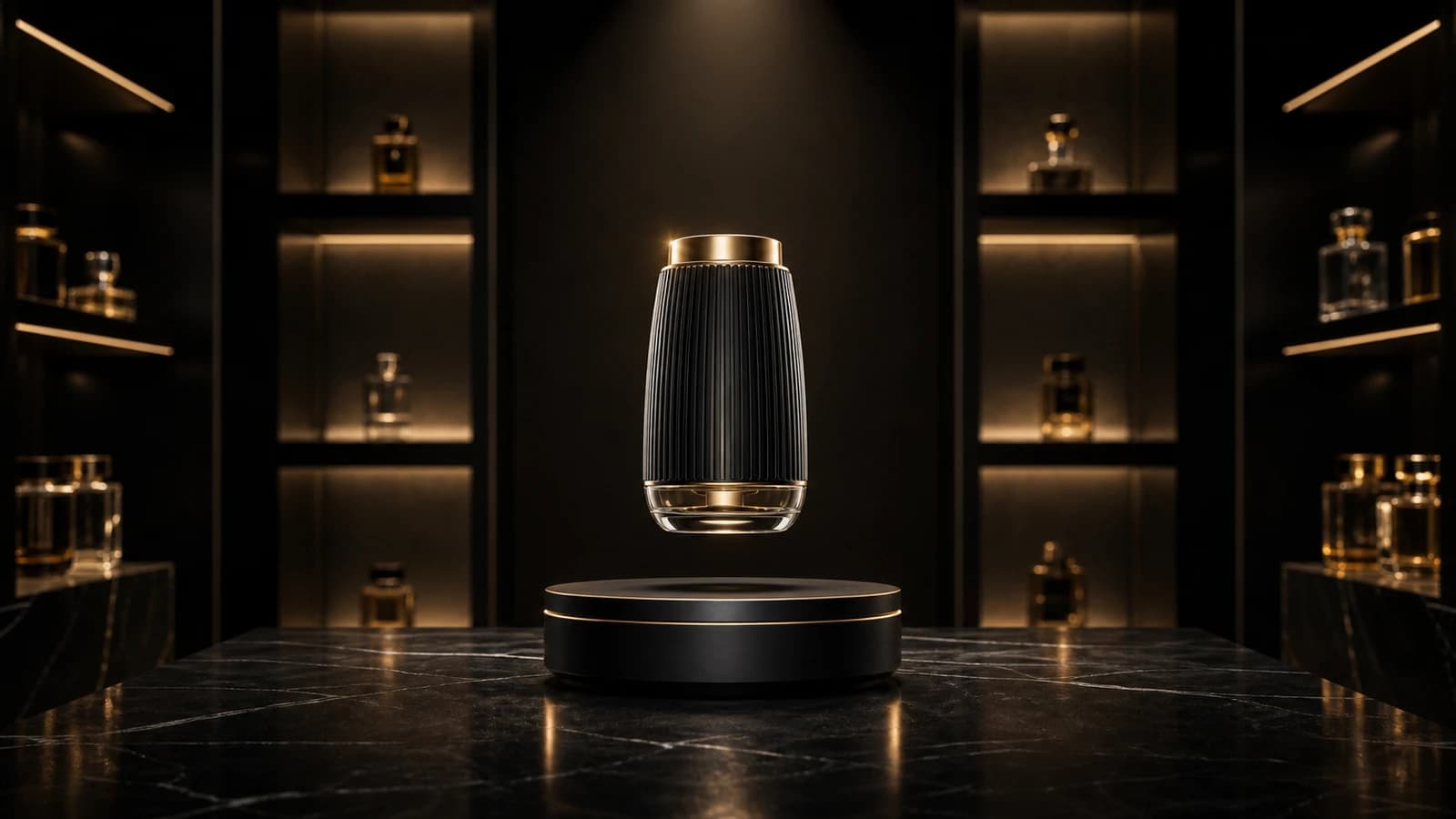
Floating displays for perfume brands are used to create a hero product moment around one bottle, one launch, or one limited edition without adding excessive display noise. In fragrance retail, the problem is rarely lack of products. The problem is that too many bottles share similar display logic, making it harder for a single item to slow the customer down and earn focused attention.
This article is for beauty brands, VM teams, retail designers, and launch managers who need to make one fragrance feel spatially special. The value of levitation in this context is not just novelty. It is controlled focus, improved separation from the background, and a more editorial product presence.
Why Perfume Brands Need a Hero Product Moment
Fragrance counters often compete through density: many SKUs, gift sets, campaign materials, and light sources all sharing one relatively compact space. In that environment, a hero product can easily disappear into the broader brand block. A floating display changes that hierarchy by removing the expected support relationship and creating a cleaner frame around one object.
That visual pause matters because perfume buying is emotional as well as functional. The more clearly a bottle is staged, the easier it becomes to connect packaging design, campaign mood, and perceived value. Reviewing AMO's floating display systems can help teams decide whether a hero display is meant for a boutique counter, a window, or a launch reveal.
How Floating Displays Change Counter Presence
A floating display alters counter presence by doing less, not more. Instead of relying on taller risers, crowded props, or aggressive campaign graphics, it uses spatial contrast to let the bottle stand apart. This is especially effective for premium launches, limited editions, or signature fragrances that need to look quieter and more deliberate than the surrounding assortment.
For buyers, the operational question is whether the display still works within real counter conditions. Power routing, viewing angle, queue behavior, and daily reset routines all need to be considered. That is why it helps to compare display strategy against relevant brand display environments before locking the final format.
Materials, Light, and Reflection
Perfume presentation is highly sensitive to light and reflection. Clear glass, metallic caps, mirrored surfaces, and lacquered bases can become elegant or distracting depending on how the display is built. Floating presentation can amplify beauty, but it can also reveal poor finish choices quickly. Buyers should therefore specify whether the intended effect is warm and intimate, sculptural and dark, or bright and highly reflective.
Material selection matters just as much. Matte black, smoked acrylic, brushed metal, soft gloss lacquer, and stone-like finishes each create a different relationship between bottle and base. The best result usually comes when the base supports the bottle rather than competing with it.
Launches, Limited Editions, and Retail Windows
Floating displays are particularly strong for launches and limited editions because they create a sense of event without needing a large footprint. One display can anchor a campaign table, act as the focal point in a window, or give a collector bottle more narrative weight during a short launch cycle. This is useful when the brand wants a memorable visual gesture but still needs a display system that can be sampled, shipped, and deployed with discipline.
The same logic applies to window presentation. A floating bottle reads well in photography and short video, making it useful for social capture as well as in-store storytelling. Buyers who want to connect display strategy with retail atmosphere should also review why luxury retail stores use floating product displays.
OEM Customization for Brand Codes
Perfume brands rarely want a completely generic base if the display is meant to represent a flagship launch or a prestige sub-line. OEM customization may include shell proportion, material palette, finish tone, packaging, brand mark integration, or even object-specific tuning based on the bottle silhouette. The key is to decide early which elements are essential to brand recognition and which can remain closer to a standard platform.
That is where AMO's OEM magnetic levitation development path becomes practical. It allows the project to move from mood and object review into sample planning without losing control of finish expectations or deployment logic.
For fragrance teams, the strongest sample is usually more than a technical approval tool. It also helps resolve merchandising questions about backdrop tone, reflection level, counter integration, and how much visual drama the bottle should carry in relation to surrounding campaign material.
Questions to Ask Before RFQ
Before sending a custom display inquiry, buyers should define the bottle dimensions, target environment, expected quantity, finish direction, and whether the display is intended for a campaign moment or a longer-term rollout. Those questions help the supplier judge feasibility more accurately than a mood board alone.
Perfume display RFQ checklist
- State whether the project is for counter, window, event, or collector presentation.
- Provide bottle dimensions and any non-negotiable orientation rules.
- Clarify the desired finish family and lighting mood.
- Define whether packaging or branded inserts are required.
- Separate sample needs from rollout timing.
- Use the request a custom display quote flow when the brief is specific enough for supplier review.
FAQ
Why does levitation suit perfume presentation particularly well?
Because perfume relies heavily on visual desire, packaging detail, and spatial mood. Floating presentation increases focus without overcrowding the surrounding counter.
Is a floating display only useful for flagship stores?
No. It can also work for launch counters, limited-edition campaigns, windows, collector moments, and selective travel retail or event installations.
What usually needs customization for a perfume display project?
Most brands care about shell proportion, finish tone, packaging, and how the bottle visually relates to the base. Those decisions often shape whether the display feels premium or generic.
What is the best first step for a perfume brand project?
Review relevant floating display systems, compare examples of brand display environments, and then request a custom display quote with bottle size and use case clearly defined.