
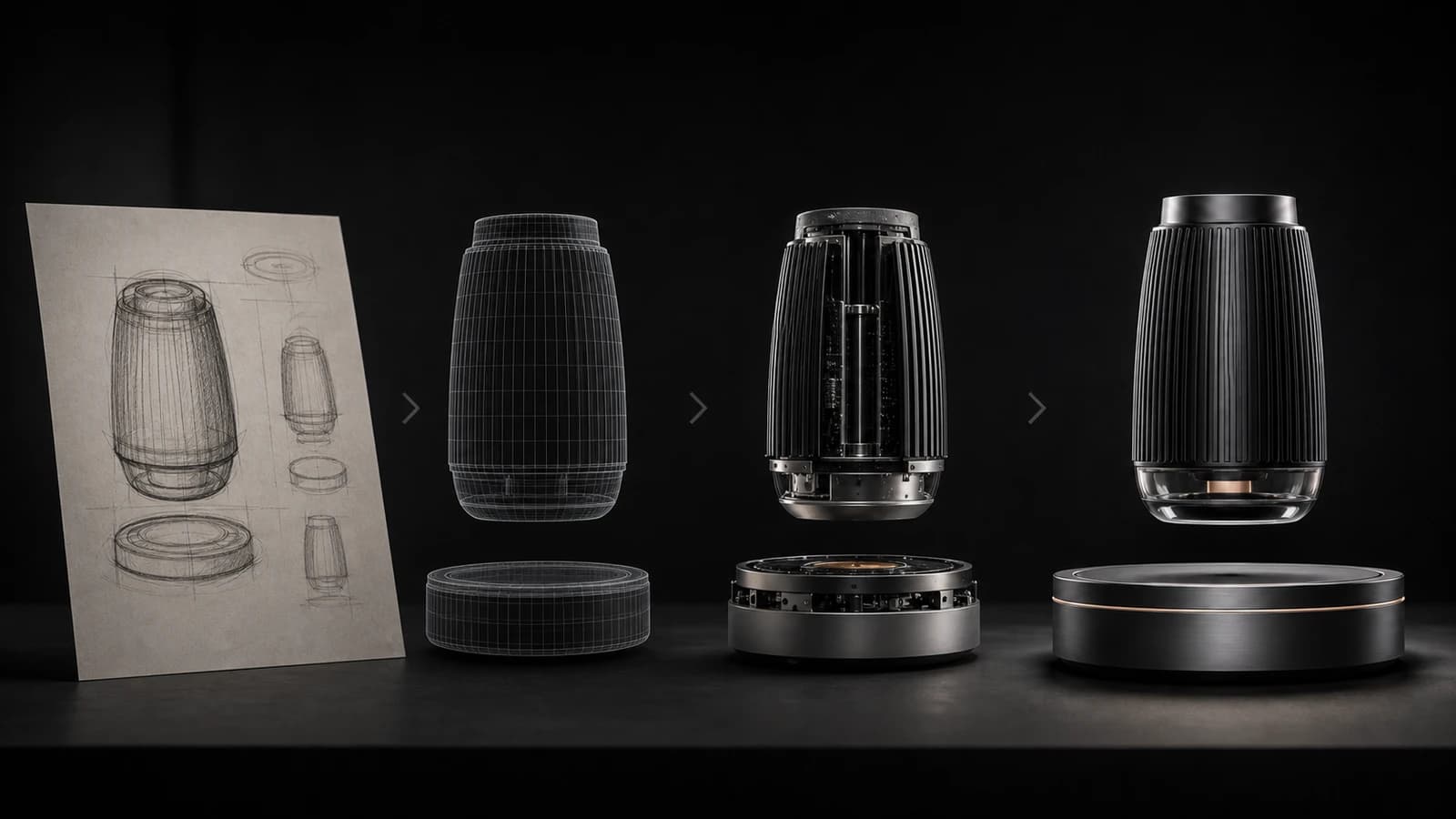
Introduction
An OEM floating display project starts with a commercial goal, not with a finished technical drawing. A brand may want a floating centerpiece for retail, a sculptural object for hospitality, or a custom presentation system for an event launch. The floating effect is important, but it is not the whole brief. The project also has to carry visual identity, packaging logic, approval workflow, and production feasibility.
This is why OEM floating display work should be treated as a structured development path rather than a simple purchase order. Buyers who define the project clearly at the brief stage reduce revision loops later, especially when multiple teams are approving aesthetics, function, and commercial timing at once.
What Is an OEM Floating Display Project?
An OEM floating display project is a custom development program in which the display system is adapted for a buyer's product, brand direction, or presentation environment. That can involve custom dimensions, surface finishes, packaging, object-specific balance, branding details, or even a custom top object. In other words, OEM work changes the final presentation logic, not just the label on the box.
The important implication for buyers is that OEM should be measured by process quality. The supplier needs to show how the project moves from brief to concept, engineering, sample, and production approval. If that process is vague, the project is likely to drift even if the initial concept images look strong.
From Brand Brief to Levitation Concept
The brief should define the object category, environment, intended visual impression, brand codes, approximate quantity, and launch timing. Without this information, the supplier can only estimate against assumptions. For premium floating displays, the concept usually has to solve two things at the same time: how the base and object should look together, and how the hovering behavior should feel in a real space.
This stage is also where the buyer should say what cannot change. That may be the finish tone, the object orientation, the minimum packaging level, or the need for quiet operation in a boutique or hospitality environment. Reviewing the OEM & ODM development path before sample work begins helps keep these constraints visible, and the related article on OEM Magnetic Levitation Products: From Concept To Production is useful when internal teams need a broader project-flow reference.
Engineering and Stability Requirements
Once the concept is clear, the project becomes an engineering question. Weight, size, center of gravity, rotation expectations, power logic, and environmental sensitivity all affect whether the floating display can behave the way the brand team expects. The display must be evaluated as a system, not as an isolated base.
For buyers, this is the moment to ask what assumptions are being made and what will be tested in the sample. If the object is asymmetrical, fragile-looking, or especially reflective, those facts need to be built into the validation plan. A beautiful concept that ignores balance or setup usability often becomes expensive to correct later.
Materials, Finish, and Brand Details
In floating display projects, visible materials communicate as strongly as the floating effect itself. Matte black, brushed metal, soft gloss, smoked acrylic, lacquered stone effects, and other premium finishes each change the tone of the final installation. Buyers should therefore specify not only the color family, but also the feel they want the display to project.
Brand details can also extend into packaging, inserts, unboxing sequence, and setup instructions. These may sound secondary, but they become important when the display is meant for executive gifting, store rollout, or premium launch delivery. Studying reference floating display systems can help teams define where they want to stay close to a standard format and where they want deeper customization.
Prototype Review and Sampling
Prototype review is where the OEM project stops being conceptual. The buyer can finally assess hovering stability, scale, finish quality, motion character, and whether the object actually reads as intended in space. Sampling should not be reduced to a quick visual sign-off. It is the stage where engineering assumptions and brand expectations are compared directly.
Sample review framework
- Check object stability from the main intended viewing angle and from side angles.
- Evaluate sound level in a quiet room rather than only in a busy workshop.
- Review finish quality under lighting similar to the final environment.
- Confirm packaging protection and setup practicality.
- Document revision ownership before approving the next stage.
Production Planning
Production planning should begin only after the sample solves the important questions. That includes object fit, finish quality, packaging logic, and a realistic production schedule. Buyers should distinguish between a sample that proves feasibility and a sample that is ready to become the production reference. Those are not always the same milestone.
It also helps to define whether the first run is a pilot, a selective commercial rollout, or a broader deployment. Those scenarios create different expectations for packaging depth, spare planning, setup consistency, and approval rigor. A pilot run can tolerate some learning after delivery, while a broader rollout needs more discipline before production begins.
AMO's value in OEM floating display projects is strongest when the buyer needs a premium presentation system with structured development rather than an improvised one-off. A practical next step is to review OEM & ODM development, compare reference floating display systems, and then request an OEM quote with the commercial brief attached.
FAQ
What should be included in an OEM floating display brief?
The brief should define the object, intended environment, finish direction, quantity expectation, packaging needs, and approval path. The clearer these inputs are, the more reliable the sample and production discussion becomes.
When does a floating display project become OEM rather than standard?
It becomes OEM when the display needs meaningful changes to appearance, packaging, object tuning, or deployment logic beyond a standard reference configuration.
Why is sample approval so important in floating display projects?
Because the sample tests both visible presentation and engineering behavior. It shows whether the project actually works, not only whether the concept looks attractive in a rendering.
How should buyers start if they are still comparing formats?
Start with the OEM & ODM development page, shortlist relevant floating display systems, and use the RFQ flow once the project is specific enough for sample planning.