
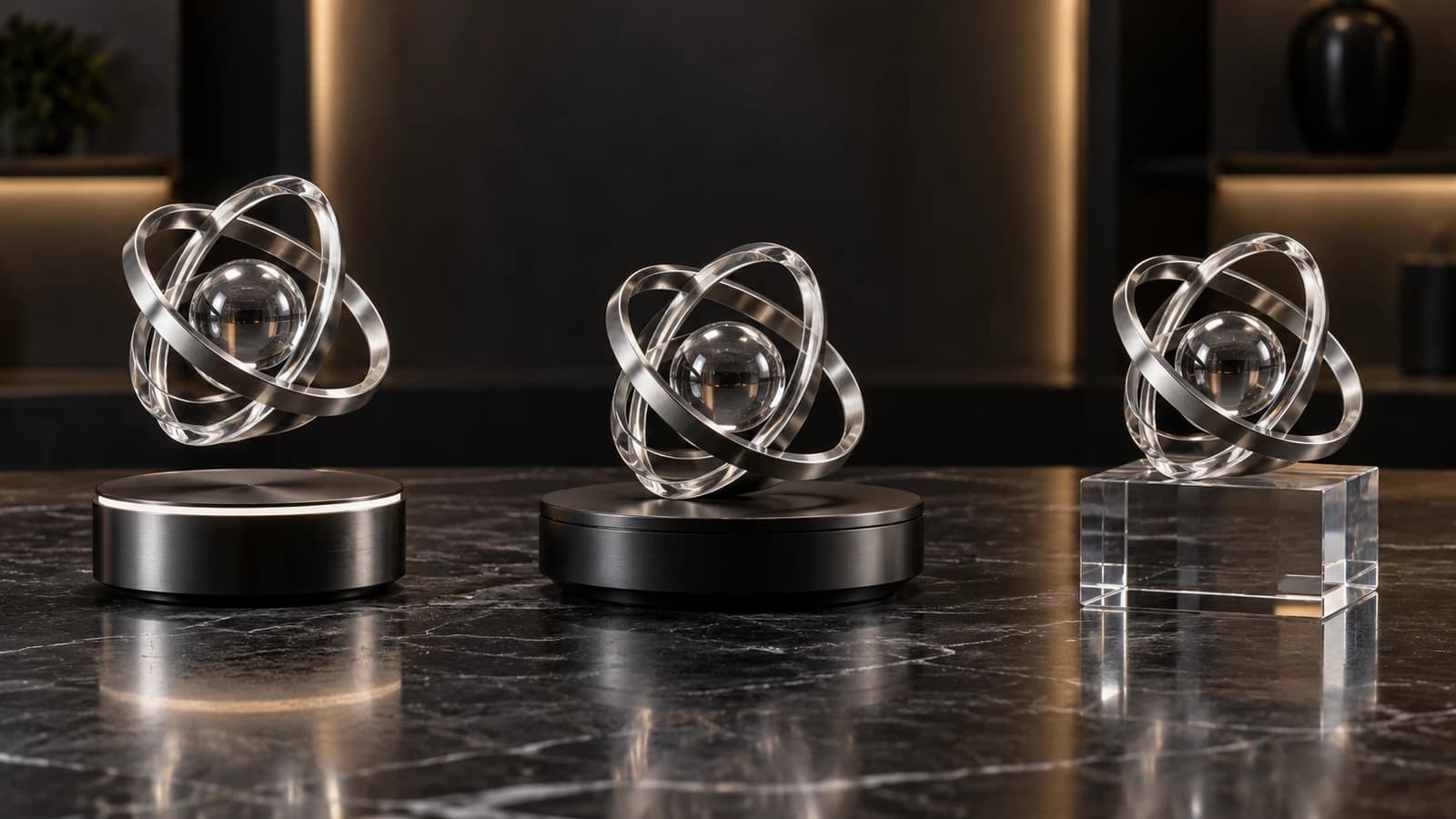
Direct Answer
A magnetic levitation display is best when one compatible object needs maximum visual separation, a sense of surprise, and optional frictionless-looking rotation. A motorized rotating stand is better when the priority is predictable 360-degree motion, broader payload flexibility, and easier object changes. A clear acrylic riser is best when the goal is simple height, organization, low cost, and minimal operating complexity.
No format is universally better. Choose based on the object, audience, duration, handling, budget, and what the display must communicate. Levitation creates the strongest visual pause, but it requires a matched object and careful setup. A turntable is less surprising but often more flexible. A riser is static but dependable.
When Magnetic Levitation Is the Best Choice
Levitation works when the empty air beneath the object adds meaning. It can make a launch object feel futuristic, a fragrance shell feel lighter, or a collector sculpture feel separate from ordinary merchandise. With no visible support at the center, viewers can see more of the lower form, and gentle rotation can reveal multiple sides.
The tradeoff is compatibility. The floating object needs a matched magnetic assembly, controlled weight, and suitable balance. Setup is more sensitive, and nearby magnetic items may need separation. Levitation is therefore strongest as a hero display rather than a universal shelf system for products that change every hour.
When a Rotating Turntable Is Better
A motorized rotating display stand supports the object physically and turns it at a designed speed. It can accommodate many nonmagnetic objects without internal modification, provided they fit the platform's load and size limits. Staff can usually swap products more easily, which is useful for photography, trade shows, dealer counters, and changing assortments.
Because the object touches the platform, the stand remains visible and may hide part of the lower form. Bearings and motors can create sound, and the rotation mechanism introduces wear. However, predictable speed, direction, and payload flexibility can make a turntable the more practical choice when movement matters more than the illusion of floating.
When an Acrylic Riser Is Better
An acrylic riser raises an object, organizes a group, and keeps the visual system simple. It needs no power, setup training, magnet, or moving component. It is usually easier to clean, replace, and use with many product sizes. For dense shelves, temporary merchandising, small budgets, and high-touch environments, that simplicity is a real advantage.
Clear acrylic is not invisible. Edges catch light, scratches become visible, and the support still occupies space. It also does not create motion. But if the product already has strong recognition or the display needs to remain understated, a well-proportioned riser may be the most honest and efficient solution.
Compare Attention, Flexibility, and Risk
Levitation usually wins on surprise and visual separation. A turntable wins on controlled motion and object flexibility. A riser wins on simplicity and low operational risk. The strongest choice depends on which benefit serves the audience. A museum may value calm viewing more than movement; an electronics launch may want a futuristic signal; a busy shop may need fast product changes.
Risk also differs. A levitating object can fall if power is interrupted or setup is wrong. A turntable can catch cables or move an unbalanced object. An acrylic riser can tip, scratch, or create reflections. Each format needs a stable surface, suitable load, and a layout that protects the object and viewer.
Cost, Maintenance, and Rollout
An acrylic riser is generally the simplest to source and replace. A turntable adds a motor, power supply, speed specification, and mechanical life. Levitation adds magnetic compatibility, control, setup, and often custom development. That does not make levitation a poor value; it means the effect should be reserved for products where increased attention justifies the extra work.
For a multi-store rollout, compare total operating cost, not only purchase price. Include samples, fixtures, adapters, setup time, staff training, cleaning, spares, packaging, and replacement procedures. Read why luxury retail stores use floating displays to connect the format choice to the desired customer response.
Before rollout, place each format in a realistic mockup and observe it from the shopper's normal approach. The best choice on a specification sheet can change once reflections, shelf height, surrounding products, and staff access are visible together.
Decision Checklist
Choose the format by answering these questions:
- Does the object need to appear unsupported, or only raised and visible?
- Is controlled rotation essential, optional, or distracting?
- Will staff change the object frequently?
- Can the product be modified with a compatible magnetic assembly?
- What are the payload, center of gravity, handling, and fall risks?
- Is power available, and are sound, heat, and cable routing acceptable?
- How much setup, training, maintenance, and replacement can the site support?
- Does the expected attention justify the full program cost?
FAQ
Is a magnetic levitation display better than a rotating stand?
It is better for visual separation and surprise. A rotating stand is better for predictable motion, easier product changes, and wider compatibility.
Is a floating display better than an acrylic stand?
It creates more attention and motion, but an acrylic stand is cheaper, simpler, unpowered, and often safer for frequently handled products.
Which display is best for a hero product?
Use levitation when the floating effect supports the product story and the object can be engineered safely. Use a turntable when every side must be shown predictably.
Which option is best for trade shows?
It depends on setup time, noise, transport, staffing, and object changes. Turntables are flexible; levitation can create a stronger focal point for one flagship object.
Can one fixture combine levitation and rotation?
Yes, many levitating objects can rotate, but the motion may be free or gently initiated rather than motor-controlled. Specify the desired speed and behavior during development.
Next Step
List the product, audience, viewing distance, duration, handling frequency, desired motion, quantity, and budget before selecting a fixture. Compare standard AMO floating display products and relevant case studies. If the hero object needs a custom levitation platform, send the brief through request a quote for feasibility, sample, and rollout planning.