
Introduction
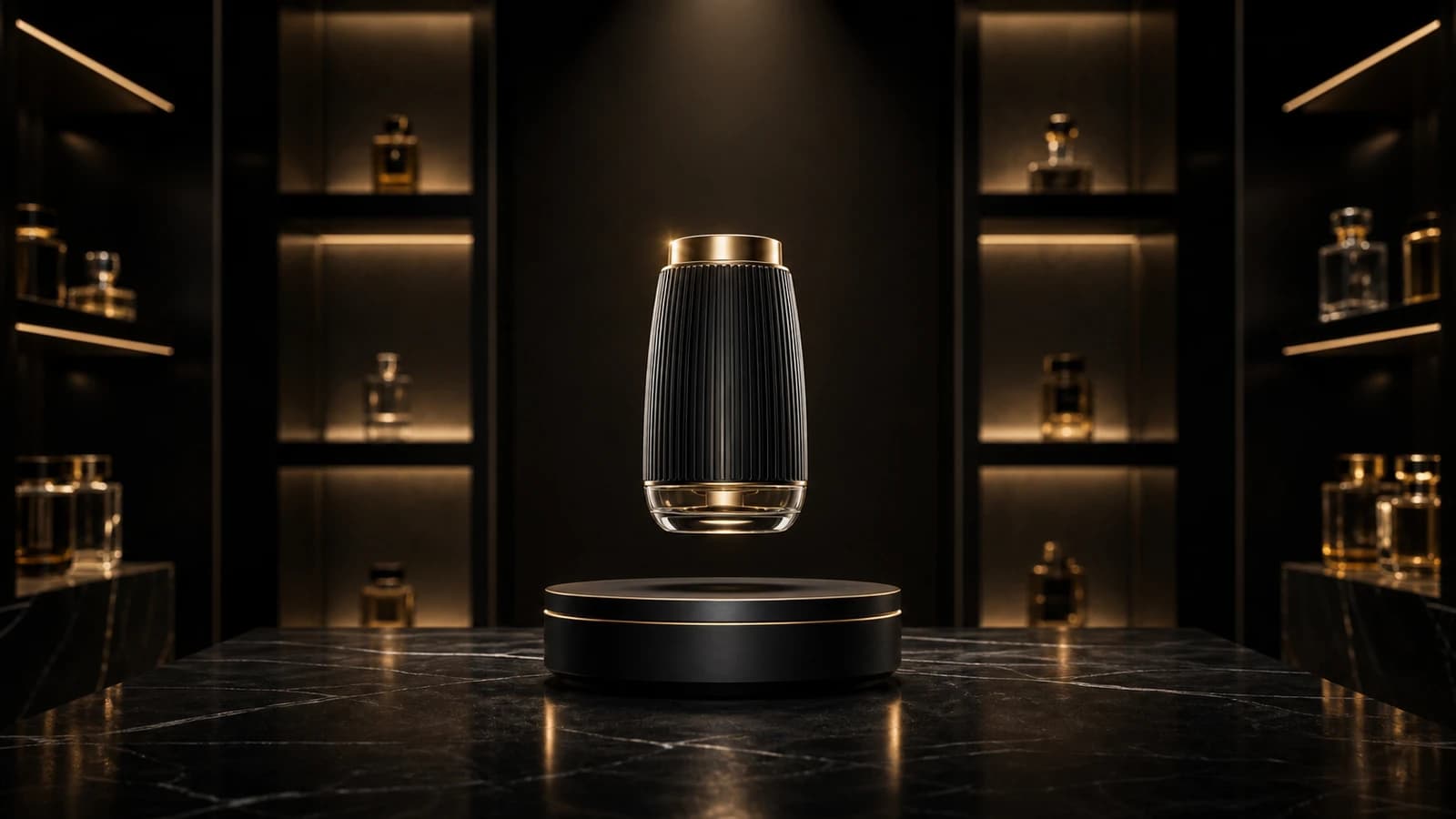
If you are evaluating floating product displays for luxury retail, the short answer is that brands use them to isolate one hero product and increase perceived value without adding visual clutter. That makes them useful for launch tables, window moments, and flagship showcases, and AMO's product collection helps buyers compare which floating display formats support that type of retail product presentation.
The next procurement question is whether the display can match brand finish, object weight, and rollout scale across boutique, campaign, or flagship settings. Reviewing relevant case studies and then sending an RFQ for quantity, finish, and deployment scope helps turn a luxury retail display idea into an operational project.
For store designers and brand teams, levitation offers something increasingly difficult to achieve with standard fixtures: a premium focal point that feels technological, architectural, and emotionally memorable at the same time. That combination explains why floating display has become more common in luxury environments.
Attention Economy
Luxury stores compete in an environment where shoppers have already seen campaign images, product launches, and influencer content before they enter the space. The store no longer owns first exposure. What it can still own is the quality of physical attention. A floating display interrupts scanning behavior because the customer must reconcile what they are seeing with what they expect from physical objects.
Physical surprise is now a retail asset
When a store creates a small moment of disbelief, the customer often slows down and looks longer. That pause is valuable. It creates time for details to register: material finish, silhouette, lighting quality, and brand tone. In other words, levitation is not simply about being unusual. It is about creating enough attention for the product to be read properly.
Product Focus
One of the biggest advantages of floating display is visual isolation. Without a visible support structure competing for attention, the product becomes the primary subject. This matters in categories where proportion, texture, and light response are part of the product's value proposition. A perfume bottle, collectible object, or limited-edition electronic device often looks more refined when the eye is not distracted by a busy stand or oversized fixture.
Isolation sharpens product storytelling
Luxury stores rarely want the display hardware to dominate the product. They want the customer to remember the object itself. Levitation helps by reducing the visual footprint of support. The effect is often cleaner than a traditional plinth because the space around the object becomes part of the presentation rather than empty background.
Premium Positioning
Luxury positioning depends on discipline, not excess. The strongest stores communicate value through editing. They remove noise, exaggeration, and unnecessary competition around the product. Floating displays support this approach because they add technical sophistication without requiring a loud form language. When executed well, the technology feels integrated into the brand world instead of pasted on top of it.
The display must feel expensive, not gimmicky
This is where manufacturer choice matters. If the base is noisy, oversized, or cosmetically weak, the effect collapses. But when the unit is quiet, stable, and materially refined, the display reinforces the idea that the brand pays attention to invisible details. That is a core luxury signal.
Store Experience
Luxury shopping is partly about transaction and partly about atmosphere. Customers remember how a space made them feel long after they forget exact fixture layouts. Floating presentation contributes to that memory because it changes the rhythm of the store journey. It creates a visual punctuation mark that distinguishes one zone from another and encourages the shopper to engage more deliberately.
Levitation creates a hero moment without clutter
A store does not need many floating displays. In fact, too many would weaken the effect. One well-placed centerpiece can define an entire campaign zone or launch table. That efficiency is attractive because premium stores want strong moments, not visual saturation.
Customer Memory
Memorability is a commercial outcome. A customer who remembers the product is more likely to discuss it, photograph it, search for it later, or reconnect it to the brand after leaving the store. Floating displays perform well here because they attach the product to a distinctive spatial memory. The shopper is not only remembering the object. They are remembering the object floating in a carefully controlled environment.
Memory supports both conversion and advocacy
Even when a sale is not immediate, a memorable in-store experience strengthens future conversion. It also helps social sharing. Customers often photograph what looks uncommon, and levitation naturally produces images that feel more editorial than standard shelf shots.
Real Retail Applications
In practice, luxury retailers use levitation across fragrance, jewelry-adjacent accessories, spirits, limited-edition packaging, and technology displays. It works best when the product already has strong form or symbolic importance. The display should not be asked to rescue a weak object. Instead, it should intensify the appeal of an already considered product.
Execution is part of application success
The best implementations coordinate base finish, object size, lighting angle, and surrounding product density. A floating display placed in the wrong context can look isolated in the wrong way. The right context makes it feel inevitable, as though the product always deserved to be seen like this.
Conclusion
Luxury retail stores use floating product displays because they solve a subtle but important challenge: how to create stronger focus and memory without breaking the calm of a premium environment. Levitation gives stores a way to make one object feel more important, more technologically refined, and more photographically compelling. For brands that compete on perception as much as product, that is not a decorative benefit. It is a commercial one.
Why Luxury Merchandising Favors Restraint
Luxury merchandising has moved steadily toward restraint because abundance is no longer a reliable proxy for value. Premium customers often interpret restraint as confidence. When a store gives one object more air, more light discipline, and more separation from the surrounding assortment, it communicates that the product can justify focused inspection on its own merits. Levitation works especially well inside that visual logic because it makes the product feel singled out without relying on oversized graphic framing.
Scarcity cues are built through presentation
Even when stock is available, the display can suggest rarity through staging. A floating hero object looks less like inventory and more like a selected artifact. That distinction changes the emotional temperature of the interaction. The customer shifts from browsing mode toward appraisal mode, which is often where premium purchase intent strengthens.
What Store Teams Need From The Supplier
Store design teams usually need more than a product that floats in a showroom. They need predictable operation, reliable setup, finish consistency across multiple units, and packaging that survives transport to stores without degrading the effect. If a display is difficult to align, too fragile for rollout, or inconsistent in lighting and finish, the luxury signal is quickly weakened.
Reliability protects the in-store experience
A premium store cannot afford a hero installation that becomes a service problem. This is why supplier process matters so much. The technical quality of the unit and the operational quality of the rollout are inseparable. Luxury execution is not only about appearance; it is about sustaining that appearance every day.
Why Photography Matters
Another reason floating display performs well in luxury retail is that it photographs exceptionally well. Store launches, campaign recaps, and customer social sharing all benefit from a presentation method that creates built-in visual drama without requiring a complex set. The product appears more editorial, which helps the store environment extend into digital channels naturally.
In-store design now lives online as well
Retail teams increasingly judge installations by how well they work in person and in content capture. A floating display can satisfy both. It creates a strong real-world focal point while also producing imagery that looks intentional and premium when circulated beyond the store.
Staff Training And Daily Operation
Even the best display concept needs to survive daily retail reality. Store teams may need clear setup guidance, cleaning instructions, and simple troubleshooting steps so the hero installation always looks intentional on the sales floor. A floating display that is easy to operate has a much better chance of staying in premium condition throughout a launch window or seasonal program.
Operational ease protects visual value
Luxury presentation is fragile in one important sense: small inconsistencies are noticed quickly. If alignment drifts, if the base shows wear, or if the object is not restored correctly after handling, the premium effect weakens. This is why product quality and operational clarity matter equally in luxury store use.
The Best Luxury Displays Feel Natural
Customers should not feel that the store is trying too hard to impress them. The strongest floating displays feel as though they belong to the architecture and to the product story. They are surprising, but not noisy. They are technological, but not overexplained. That balance is what makes them effective in luxury retail instead of merely attention-seeking.
Lasting Value
The value of floating display in luxury retail is not only the first impression. It is the ability to create a repeatable premium signal across launch programs, campaign moments, and flagship storytelling. That repeatability is what turns a striking visual idea into a useful retail asset.
Contact AMO for OEM & ODM support.