
Introduction
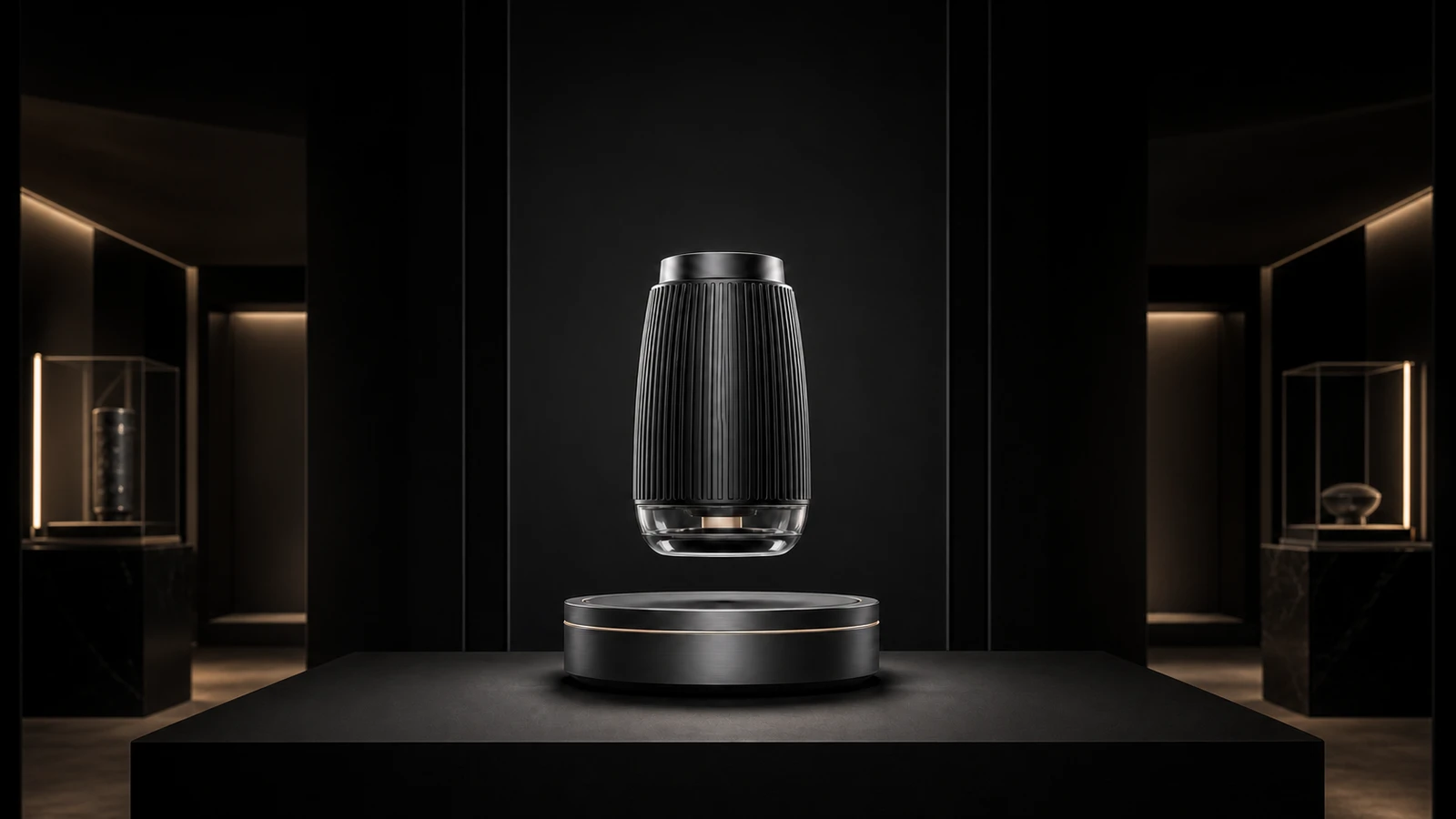
A floating display manufacturer develops and produces magnetic levitation display systems used to present one object with more focus, separation, and perceived value than a conventional stand can usually deliver. For buyers in retail, hospitality, exhibitions, and premium gifting, the question is not only whether an object can float. The real question is whether the supplier can turn that effect into a stable, repeatable, commercially usable display.
This guide is for brand teams, architects, visual merchandising managers, sourcing teams, and OEM buyers who are comparing suppliers rather than browsing for novelty products. If your project needs reliable presentation quality, custom finish control, or a scalable rollout path, this is where supplier evaluation should start.
What Is a Floating Display Manufacturer?
A floating display manufacturer is not simply a reseller of desk toys. In a B2B context, the manufacturer is responsible for the display system as a whole: magnetic architecture, stability tuning, rotation behavior, visible finish, power setup, packaging protection, and production consistency. For premium programs, the supplier also needs to understand how the display will sit inside a boutique counter, hotel lobby, museum reveal, trade-show installation, or OEM launch environment.
That matters because the display is usually judged as part of the brand presentation, not as an isolated gadget. A beautiful floating effect with unstable hovering, audible noise, weak packaging, or poor surface finish will fail the commercial brief. Buyers who are comparing floating display systems should therefore look for a manufacturer that can discuss presentation quality and engineering in the same conversation.
Where Floating Displays Are Used
Floating displays are most useful when one object needs stronger visual hierarchy than the surrounding environment naturally gives it. In retail, that often means a hero product on a fragrance counter, a limited-edition object in a window, or a centerpiece inside a luxury showcase. In hospitality, floating displays can support signature objects, branded amenities, collectible collaborations, or sculptural table-top moments without introducing a loud digital screen.
Exhibitions and brand activations use floating displays for a similar reason: the display creates a controlled pause. Visitors may not read the mechanism, but they immediately notice the object behaving differently from everything around it. That makes floating presentation useful for launch zones, booth centerpieces, compact brand storytelling, and premium object reveals. If you want a broader strategic view, AMO's article on the future of floating objects shows why this format has become more commercially relevant.
What Buyers Should Check Before Choosing a Supplier
The first checkpoint is stability. A display that floats only under perfect bench conditions is not enough. Buyers should ask how the supplier evaluates weight tolerance, object balance, re-centering behavior, and long-duration operation. The second checkpoint is visual finish. Premium projects usually need the base to look intentionally designed, not technically improvised.
Other practical questions include whether rotation is smooth, whether the operating sound fits a quiet environment, whether the display can be customized without breaking performance, and whether the packaging protects both the base and the floating object. These are the details that separate a presentation tool from a fragile demo piece.
Buyer checklist
- Confirm the intended object size, weight, and center-of-gravity assumptions.
- Ask whether the display is meant for retail, hospitality, exhibition, or gifting use.
- Review finish quality, material options, and visible cable or power details.
- Separate sample lead time from production lead time.
- Check whether branding, packaging, and object-specific tuning are handled in the same project flow.
- Confirm who manages revisions, approvals, and shipping coordination.
OEM Options for Floating Display Projects
Many buyers do not need an off-the-shelf base. They need a display that matches brand codes, object dimensions, finish language, packaging standards, and rollout goals. That is where OEM magnetic levitation development becomes relevant. OEM work can involve custom shells, unique base sizes, lighting adjustments, packaging changes, object fixtures, or application-specific tuning for launch programs and long-term commercial use.
The important question is not whether customization is possible in theory. It is whether the supplier has a disciplined method to move from brief to design review, sample, revision, and production sign-off. Projects run faster when merchandising, sourcing, and engineering can approve against the same documented sample rather than relying on loosely interpreted demo feedback.
MOQ, Sampling, and Lead Time
MOQ for floating displays depends on how much the project departs from a standard platform. A stock-format base with limited cosmetic changes is a different sourcing problem from a custom display shell, object-specific tuning, and custom packaging program. Sampling cost and timing also change with that scope. Buyers should treat sample approval as a functional milestone rather than a formality, because that is where performance and finish risk become visible together.
Lead time should be broken into stages: concept review, sample preparation, revision cycle, production scheduling, and shipment. When those steps are separated clearly, buyers can compare suppliers more objectively and avoid treating one optimistic number as the whole schedule. If the project is already moving toward vendor comparison, it is better to request a quote with the object type, quantity target, finish expectation, and timeline defined early.
Why AMO Fits Premium Floating Display Projects
AMO fits premium floating display projects when the buyer needs a supplier that can balance brand presentation with technical discipline. The relevant question is not whether a floating effect can be produced, but whether it can be adapted cleanly for launch counters, hospitality display moments, boutique presentation, or exhibition environments where finish quality and reliability both matter.
AMO's approach is built around premium object presentation, OEM collaboration, and structured project review rather than keyword-heavy catalog selling. Buyers can start by reviewing floating display systems, compare the development path through OEM magnetic levitation development, and move into a commercial discussion through the request a quote flow when the brief is clear enough for sample planning.
FAQ
What should a floating display manufacturer be able to customize?
A capable manufacturer should be able to discuss object size, visible finish, base proportion, packaging, branding, and the tuning needed for stable presentation. In many projects, those requirements move quickly into OEM magnetic levitation development rather than a simple catalog order.
Are floating displays only for retail?
No. Retail is one major application, but floating displays are also relevant to hospitality, exhibitions, museums, collector presentation, and branded launch environments. The best fit depends on object type, viewing distance, and how much visual focus the project needs.
Why is sample review so important?
Sample review is where buyers can evaluate stability, sound, finish quality, packaging logic, and object fit at the same time. A strong demo is useful, but a structured sample tells you whether the display is ready for real commercial use.
When should a buyer submit an RFQ?
The right moment is when the product type, environment, target quantity, and finish expectation are clear enough for a supplier to estimate feasibility and timing. At that point, using the request a quote page reduces ambiguity and speeds up comparison across suppliers.