
Introduction
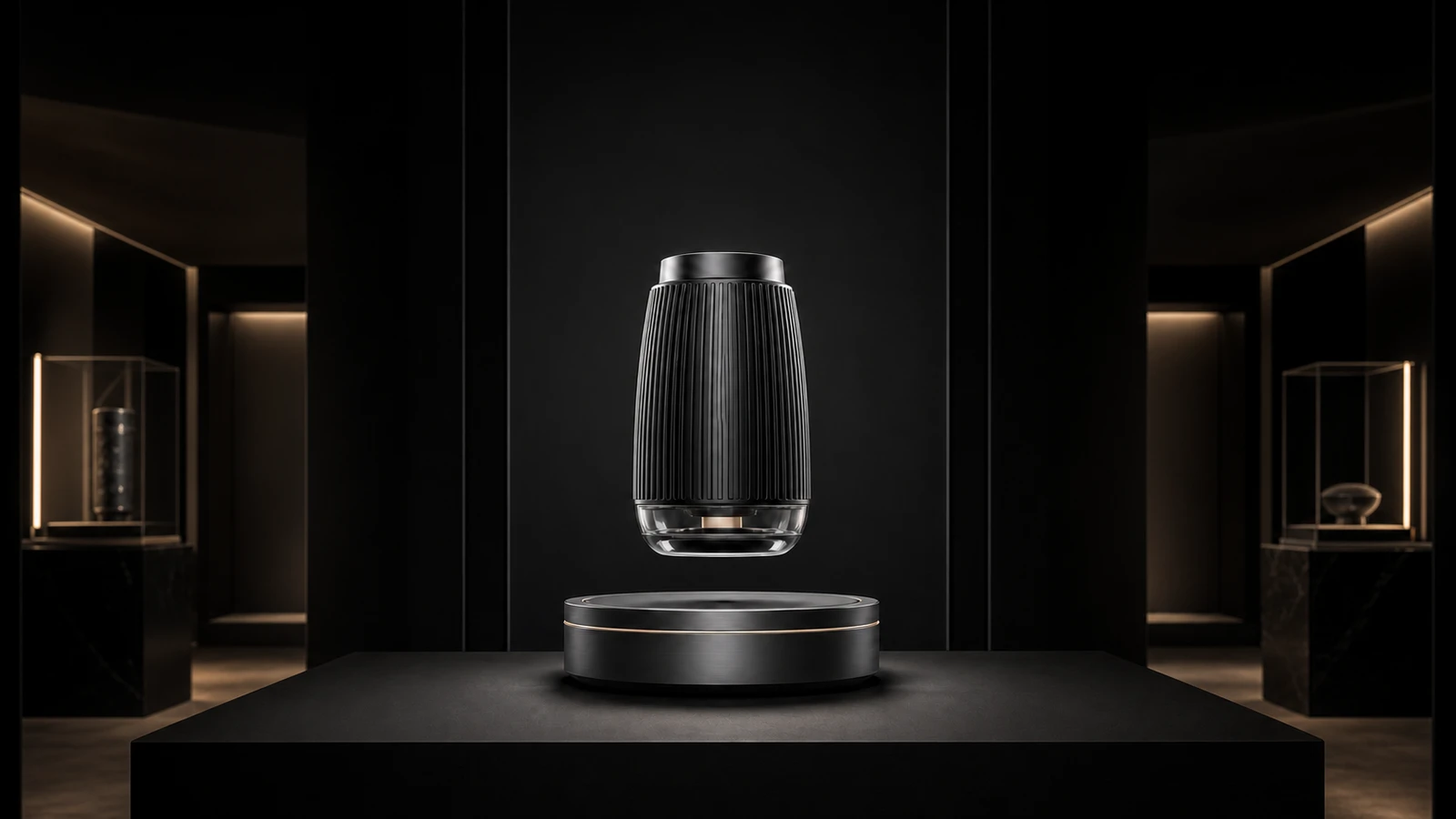
If you are asking why magnetic levitation is changing product presentation, the short answer is that it creates a cleaner pause around one object than many conventional fixtures. For brands, retailers, and exhibition teams, floating product presentation can create premium focus without adding more visual noise, and the current product range shows how contactless display technology can be adapted for multiple commercial environments.
The next buyer question is whether the technology can be sourced, customized, and validated reliably enough for a real program. Reviewing OEM & ODM options and the supplier checklist in how to choose a magnetic levitation manufacturer helps turn a levitating product display idea into a more realistic sourcing path.
For B2B teams, that shift matters because presentation now carries real commercial weight. A hero display has to justify floor space, reinforce brand positioning, support photography, and still work reliably for daily operations. Magnetic levitation answers that brief better than many conventional fixtures because it changes perception without adding visual clutter.
Traditional Display Is Losing Attention
Traditional display methods are not failing because they are low quality. Many are beautifully built. The problem is that shoppers, guests, and event visitors have learned their visual language. Acrylic risers, edge-lit shelves, and glass boxes still serve a purpose, but they rarely create surprise anymore. In environments saturated with polished merchandising, familiarity becomes a disadvantage. The eye passes over what it already understands.
Display sameness reduces contrast
When every premium brand uses similar pedestals, similar vitrines, and similar light temperatures, the product loses some of its ability to separate from the environment. Even a well-designed object can feel static when the display around it follows the same formula as the surrounding store. Levitation restores contrast by removing the expected support relationship between base and object. That one change is often enough to restart curiosity.
Why Floating Objects Attract The Eye
Humans are extremely sensitive to anything that appears to challenge gravity. A floating object creates a small cognitive interruption. The viewer asks a silent question before reading any product copy: how is that possible? That question buys attention, and attention is the first scarce asset in any display strategy. A display that earns two or three extra seconds of inspection often outperforms a louder display that competes with color, signage, and motion all at once.
Curiosity supports premium perception
Levitation is also effective because it keeps the object visually isolated. When the support structure is minimized, form, finish, and silhouette become easier to read. That supports premium positioning. Luxury buyers do not usually need more visual noise. They need more confidence that the object in front of them deserves focus. Floating presentation creates that confidence with restraint.
Retail Applications
Retail teams use magnetic levitation most effectively when they stop treating it as decoration and start treating it as a conversion surface. A floating hero product can anchor a new launch, frame a limited edition, or create a centerpiece inside a fragrance, watch, spirits, or electronics zone. The best retail programs pair levitation with tight lighting control and disciplined sightlines so that the object remains readable from multiple approach angles.
It helps flagship stores slow the customer down
In a flagship environment, the objective is often to interrupt walk-through behavior and create a moment of voluntary pause. A floating centerpiece does that without adding aggressive digital screens or excessive campaign graphics. It creates the sense that the product is not merely stocked; it is presented. That difference is especially valuable for premium brands that want to look technologically advanced without appearing cluttered or theatrical.
Hospitality Applications
Hotels, private clubs, and luxury lounges increasingly borrow display logic from retail because guest experience is now part of brand communication. A floating object can present a signature bottle, a room amenity concept, an award, or a collectible collaboration in a way that feels more architectural than promotional. In hospitality, the display must support atmosphere first and product messaging second. Levitation works well because it can create a focal point while still protecting the calm of the room.
Spatial elegance matters more than screen saturation
Many hospitality spaces do not want another screen or another animated graphic. They want an object to feel quietly elevated. A floating display can achieve that with low visual noise, especially in dark materials and warm lighting. For operators, that means the technology can support premium storytelling without breaking the interior language of the property.
Museum Applications
Museums use distance and framing to tell visitors what deserves contemplation. Levitation is powerful in this setting because it can create separation without bulky mounts or visually heavy supports. For design museums, science exhibitions, and future-facing cultural installations, a floating object naturally communicates precision, care, and conceptual importance.
The display becomes part of interpretation
When an artifact or model floats, the viewer reads more than the object itself. They read an argument about the object's relevance, fragility, or future orientation. That makes levitation useful not only for presentation but also for curatorial storytelling. The display method reinforces the message that this object belongs in a focused, intentional field of view.
Brand Activations
For brand activations, the challenge is usually compression. A display must communicate product quality, campaign mood, and social-media readiness in a very small footprint. Magnetic levitation helps because it creates a premium visual hook that works in person, in photography, and in short video loops. A floating product has a higher chance of being remembered and shared because it already contains a moment of visual disbelief.
It improves content capture without extra props
Activation teams often add layers of scenery to make a product photograph well. Levitation can reduce that need. When the object itself becomes the focal event, the set can stay cleaner. That is operationally useful because leaner sets are easier to transport, install, and reset during high-traffic events. The result is a display that looks expensive while staying manageable for production teams.
Future Of Spatial Experience
The broader trend is that commercial spaces are becoming more editorial. People expect to encounter fewer products at once, but each product must carry more narrative weight. This shift favors presentation systems that can direct attention with precision rather than density. Magnetic levitation belongs in that future because it creates presence through absence. By removing visible support, it adds meaning to the empty space around the object.
Physical experience is becoming a brand asset
As online transactions become more frictionless, physical environments need to justify themselves through memory, atmosphere, and differentiation. Floating presentation is not a gimmick when used correctly. It is a tool for building a more selective, more cinematic, and more premium experience around a product. That is exactly where many B2B brands are trying to go.
Conclusion
Magnetic levitation is changing product presentation because it solves a modern attention problem with a precise spatial answer. It creates focus without crowding, curiosity without shouting, and premium positioning without decorative excess. For retail, hospitality, museums, and campaign environments, that combination is increasingly valuable. The brands that adopt levitation well are not just adding technology to a display. They are redesigning how an object is encountered, remembered, and talked about.
Why B2B Teams Are Investing Earlier
One notable shift is that levitation is being considered earlier in project planning rather than added at the end as a decorative extra. Retail designers, hospitality groups, and museum planners increasingly understand that focal presentation influences architecture, electrical planning, traffic flow, and campaign photography. When levitation enters the conversation early, it can be integrated cleanly with materials, sightlines, and storytelling. When it is added late, it often looks bolted onto a display strategy that was never designed to support it.
Early integration creates better economics
This matters commercially because better integration reduces rework. Lighting can be designed around the display, packaging and transport can be specified correctly, and the object chosen for levitation can be optimized for both visual and technical performance. In premium environments, that kind of coherence often makes the difference between an attention surface that feels inevitable and one that feels improvised.
What A Successful Floating Display Requires
Successful floating presentation is not only about the levitation module. It depends on the complete composition around it. Object selection, base scale, surrounding darkness, light discipline, and viewer approach angle all affect the result. A beautiful module paired with the wrong object or placed in a cluttered environment will lose much of its impact. Conversely, a carefully selected product in a restrained setting can create an outsized sense of value and innovation.
The strongest result feels simple
That apparent simplicity is usually engineered. The module has to be stable. The object has to be visually balanced. The environment has to protect focus rather than compete with it. When those conditions are met, floating display feels less like a trick and more like a new presentation standard. That is why the future of floating objects is not about isolated novelty. It is about a better design language for premium commercial space.
Contact AMO for OEM & ODM support.