
Introduction
Floating product displays for watch brands are used when the presentation itself needs to communicate control, rarity, and confidence. Watches are judged closely. Small changes in viewing angle, lighting, and support structure affect how the case, dial, strap, and finishing are perceived. A floating display can improve that perception when it is designed to support the watch rather than overpower it.
This article is for watch brands, boutique teams, launch planners, and collector-presentation buyers who want a more refined hero-product format. The goal is not theatrical excess. The goal is to create a cleaner stage for one important object, especially when the product is a limited edition or a key launch reference.
Why Watch Brands Use Controlled Presentation
Controlled presentation matters in watches because the product story is built around detail. Material transitions, finishing quality, dial legibility, and case profile all need to be visible without distraction. If the support structure is visually heavy, the watch starts sharing attention with the display instead of owning it.
Floating presentation is one answer because it reduces that visible support relationship and creates a more focused visual field. That can help a watch feel more singular, especially in a boutique environment where many objects are competing for attention. Buyers can review floating display systems to decide whether the effect suits a launch, a permanent counter moment, or a collector-facing reveal.
Floating Displays for Limited Editions
Limited editions need presentation that signals scarcity without becoming loud. A floating display can help by making one watch feel more editorial and less stock-like. This is especially useful when the product is being introduced in a launch campaign, a boutique event, or a collector appointment where the viewing moment itself supports the perceived value of the watch.
For these projects, the brand should define whether the watch needs visible rotation, static stability, or a more dramatic reveal logic. Each direction changes how the display should be engineered and reviewed at sample stage.
Stability, Rotation, and Viewing Angle
Watch presentation is sensitive to motion. Slight instability or the wrong rotation speed can make the display look less premium even if the levitation technically works. Buyers should therefore define whether the watch should be seen as a still hero object, a slow-turning presentation piece, or a controlled multi-angle display.
Viewing angle matters as much as movement. Some watches are meant to emphasize the dial, others the case thickness, others the bracelet or strap integration. The display should support that priority. If the intended presentation angle is unclear, the supplier may optimize the wrong visual behavior.
Boutique Counter and Launch Applications
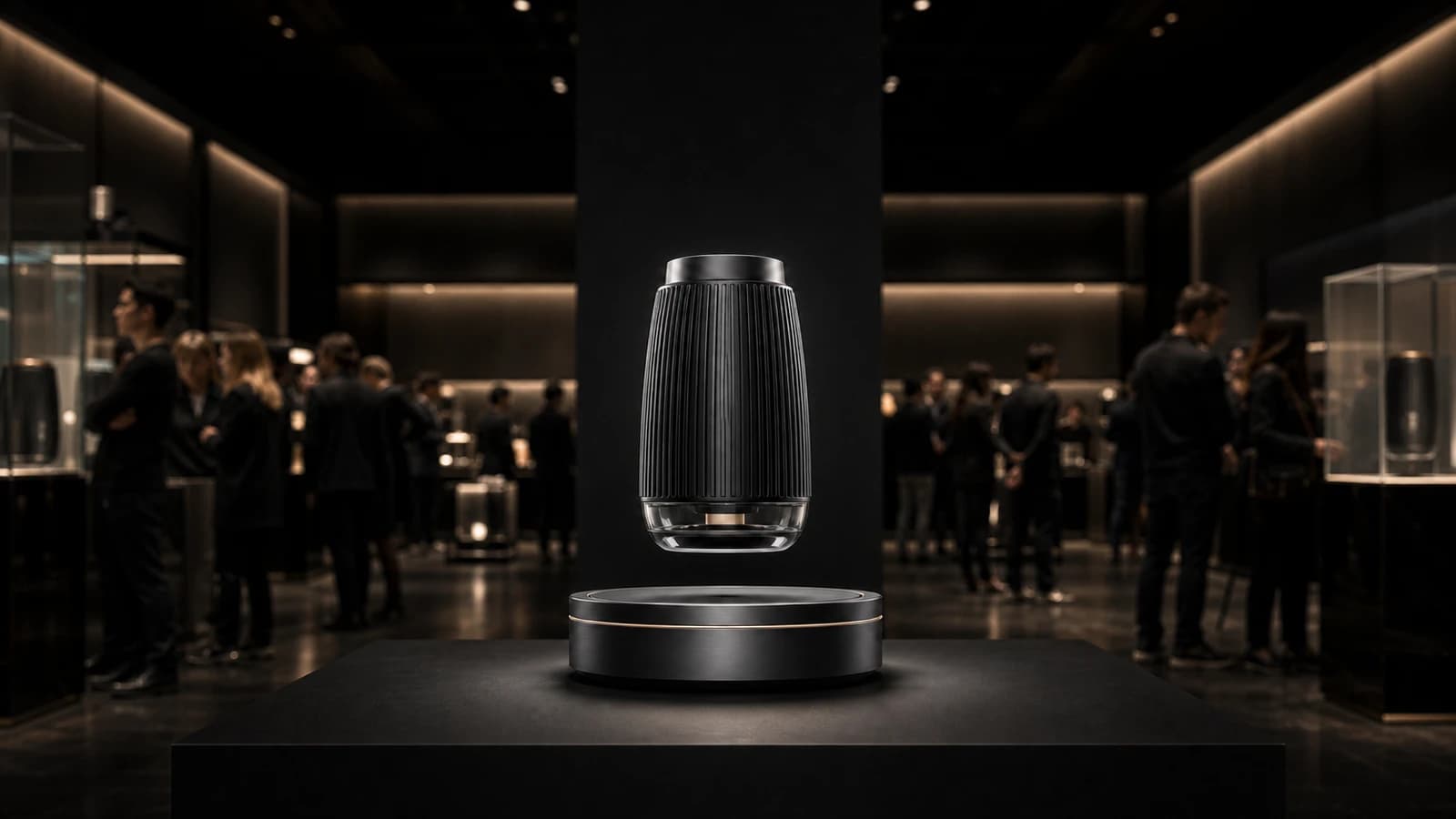
In boutiques, floating displays can support a signature model, a limited-edition reveal, or a special consultation setup for top-tier buyers. In launches, they can act as the centerpiece for photography, short video capture, or a compact event installation. The effect is strongest when the display creates more discipline, not more clutter.
This is where reviewing brand display environments can help. A display that works well in a dark launch environment may need a different finish strategy from one that sits under bright boutique lighting all day. Context should drive the decision, not the effect alone, and teams comparing watch presentation strategy often also benefit from reading Why Attention Is The Most Valuable Space In Retail.
Custom Materials and Brand Codes
Watch brands often care deeply about surface language. The visible base may need to feel technical, architectural, warm, or nearly invisible depending on the brand's identity. Material choices such as brushed metal, deep matte lacquer, smoked transparent parts, or subtle accent finishes can all change the way the watch is perceived.
That is why watch display projects frequently move into custom development. If the visual language needs to align closely with the brand or the launch program, the best next step is usually to compare the standard floating display systems against a more tailored OEM development route.
RFQ Preparation
The cleanest watch-display RFQs define the watch dimensions, preferred orientation, whether rotation is needed, the target lighting environment, packaging expectations, and the intended use case. The more precisely the brand frames the viewing experience, the easier it is for the supplier to propose the right sample path.
It also helps to state whether the display will be photographed heavily, shown in one-on-one appointments, or used in a larger boutique rollout. Those use cases affect how strict the brand should be about hero angle, finish sensitivity, and replacement planning. A launch-image display can be judged differently from a long-term boutique installation.
Brands should also note whether the display is meant to emphasize dial detail, case architecture, or the overall silhouette. That visual priority gives the supplier a more reliable basis for deciding how still or dynamic the final presentation should be.
That sounds like a small note, but it often determines whether the first sample feels right immediately or misses the intended watch story by choosing the wrong hero angle.
Watch display RFQ checklist
- Clarify whether the display is for boutique, launch, or collector presentation.
- Provide watch dimensions and the preferred viewing angle.
- State whether rotation is required and how slow or controlled it should feel.
- Define finish expectations for the visible base and packaging.
- Use the RFQ process once the project is ready for commercial review.
FAQ
Why are floating displays relevant for watch brands in particular?
Because watches are detail-driven products that benefit from controlled viewing angles, reduced display clutter, and stronger visual hierarchy around one hero piece.
Is rotation always necessary for a watch display?
No. Some projects benefit from slow rotation, while others look better with a static presentation that protects a specific hero angle.
When should a watch brand choose OEM development?
When the base finish, object relationship, packaging, or overall brand language need to be refined beyond a standard format. That is when OEM development becomes more useful than simple product adaptation.
What is the best next step for a limited-edition watch display brief?
Review floating display systems, compare relevant brand display environments, and submit an RFQ once the intended use case and viewing logic are clearly defined.