
Introduction
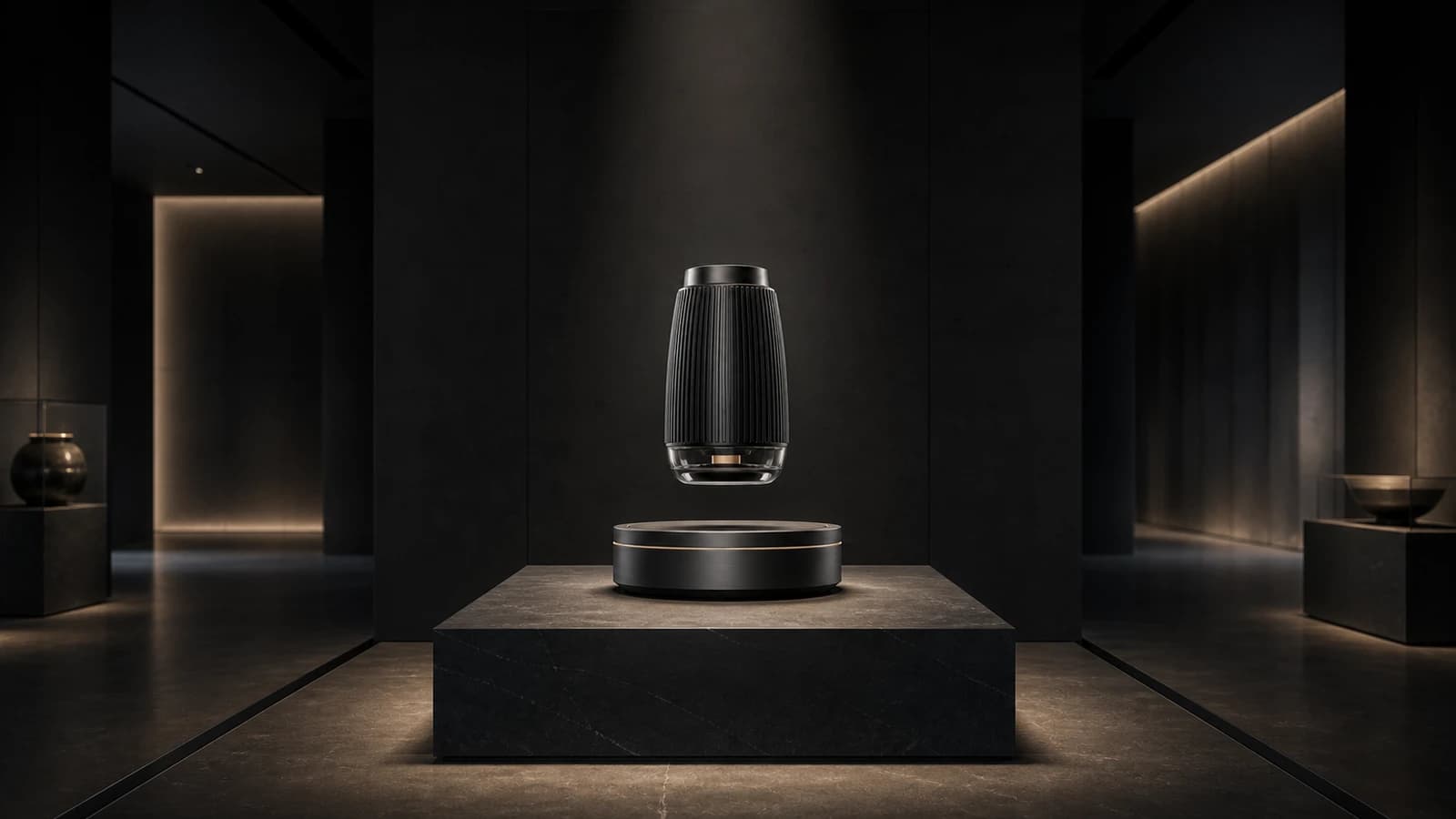
If you are evaluating a floating museum display, the main value is clearer artifact focus without bulky hardware or distracting scenography. That makes magnetic levitation relevant for future-facing galleries, artifact display systems, and exhibition reveal moments where the object needs to feel precise, protected, and conceptually elevated. Relevant case studies can help exhibition teams judge where this approach fits best.
The next procurement question is whether object size, sightlines, maintenance needs, and installation constraints can be handled safely. Comparing those limits against available products and then moving into direct contact is the fastest way to judge whether a museum or exhibition brief is technically realistic.
For museum teams, the question is not whether floating display looks impressive. The question is whether it helps communicate meaning. In many cases, it does, because it supports distance, focus, and curiosity at the same time.
Why Museums Use Space
Museums do not treat space as emptiness. They treat it as an interpretive tool. Empty space around an object signals importance, sensitivity, or conceptual weight. Levitation strengthens this approach because it uses vertical separation as part of the presentation language. The object is not only surrounded by space; it is suspended within it.
Space can frame value without more graphics
This is particularly useful in exhibitions that want to avoid excessive labels, screens, or scenographic clutter around a hero object. Levitation allows the artifact or model to hold attention through physical staging rather than narrative overload. That is often a better fit for institutions seeking a more refined visitor experience.
Psychological Distance
Distance changes behavior. When visitors perceive an object as carefully separated from ordinary touch and ordinary support, they often approach it with more attention. The display creates a subtle signal that this is not an everyday item. It belongs in a protected field of interpretation. That effect can be useful for design objects, speculative prototypes, scientific models, and symbolic artifacts.
Distance can increase respect without coldness
The best museum displays balance separation with accessibility. Levitation helps because it can create seriousness without building a visually heavy barrier. Instead of making the object feel inaccessible, it can make it feel more intentional. Visitors experience the display as a thoughtful frame rather than a defensive enclosure.
Visual Focus
Conventional mounts can introduce competing lines, shadows, and structural cues that dilute the reading of the object. Levitation reduces that competition. The eye can move more directly to proportion, material, and silhouette. In exhibitions where formal observation matters, this clarity is valuable.
Isolation supports slower looking
Museum professionals know that stronger focus can translate into longer viewing time. When the display field is clean, visitors do not need to decode as much visual noise before they start engaging with the object itself. That makes the viewing experience calmer and often more memorable.
Artifact Presentation
Not every artifact should float, but for the right object, levitation can enhance presentation dramatically. It works especially well for objects tied to innovation, lightness, future design, or symbolic transformation. It can also help present replicas, concept models, or interpretive pieces where curatorial storytelling benefits from a sense of suspension or impossibility.
Material sensitivity still matters
Museum applications require careful technical judgment. Object weight, fragility, conservation requirements, and installation constraints must all be understood clearly. Levitation should be applied where it supports the object's meaning and practical safety, not where it merely adds novelty.
Modern Museum Technology
Museums increasingly use technology not just to inform but to shape atmosphere. However, there is a difference between technology that overwhelms the gallery and technology that disappears into the experience. Levitation tends to work well because the technology can remain visually restrained while still producing a striking effect. It contributes to the exhibition without shouting over the object.
Quiet technology often ages better
Installations that rely on constant screen noise or overactive effects can feel dated quickly. Levitation, by contrast, can feel timeless when it is integrated into a clean curatorial composition. It reads as precision rather than spectacle, which makes it more adaptable across institutions and themes.
Future Exhibitions
As museums develop more future-facing exhibitions on design, science, mobility, and emerging technology, they need display tools that can communicate innovation physically. Floating presentation does this efficiently. It gives visitors a sensory clue that the exhibition is dealing with advanced thinking, even before they read wall text.
The display itself can become part of the argument
In exhibitions about the future, form and message should reinforce each other. A floating object naturally supports narratives about transformation, dematerialization, systems thinking, and advanced engineering. That makes levitation especially effective for institutions that want exhibition design to actively support interpretation.
Conclusion
Museum displays succeed when they help visitors look longer, think more clearly, and remember what they saw. Magnetic levitation supports that goal by creating distance, sharpening focus, and provoking curiosity without adding unnecessary noise. For the right artifacts and exhibition themes, it offers museums a precise way to make space feel meaningful and technology feel elegantly invisible.
Installation Planning
Museum installations often involve tighter coordination than commercial displays because they have to respect curatorial sequencing, visitor movement, conservation concerns, and opening deadlines. A levitation display therefore needs to be specified not only as an object but as an installation system. Power routing, plinth dimensions, visitor sightlines, and maintenance access all need to be understood before the unit enters the gallery.
Quiet setup matters as much as quiet operation
Exhibition teams value display systems that are predictable to install and easy to maintain during the run of a show. If the technology requires constant adjustment, the display becomes a burden on operations. If it is stable and repeatable, it becomes a trusted curatorial tool rather than a source of anxiety.
Visitor Experience Outcomes
Museums increasingly evaluate exhibition design through visitor behavior as well as curatorial intent. Does the object make people stop? Do they gather around it? Do they photograph it? Do they spend more time reading nearby interpretation? Levitation can positively influence these outcomes because it acts as an invitation to closer looking. The display creates a natural pause point in the gallery.
Curiosity can improve narrative uptake
When curiosity is activated visually, visitors are often more receptive to the interpretive story that follows. That makes levitation useful not only as a visual strategy but also as a learning strategy. The display method can help create the attention window in which context becomes more meaningful.
Balancing Innovation With Care
Museums must be especially disciplined about using technology in service of the object rather than in competition with it. Levitation succeeds in museum contexts when it feels calm, exact, and justified. The object should remain primary. The technology should feel supportive and almost invisible in the visitor's final memory.
Restraint keeps the exhibition timeless
Displays that rely on overstatement can age quickly. Displays that use advanced technology with restraint often remain compelling much longer. That is why levitation has real promise in museum settings: it can communicate innovation while still respecting the quiet authority of the gallery.
Why Curators Value Repeatability
Curators and exhibition producers often need display systems that can be repeated across opening days, loan cycles, photography sessions, and maintenance intervals without losing quality. Levitation becomes much more valuable when it is not just visually strong on installation day, but stable enough to remain part of the exhibition language over time. Repeatability builds trust between the display technology and the institution using it.
Repeatability helps design ambition scale
When a museum knows that a floating display can be installed, aligned, and maintained consistently, the team can use the technology with more confidence in future projects. This shifts levitation from one-off spectacle to a dependable curatorial option. That is an important distinction because museums rarely invest in display methods they cannot operationalize cleanly.
Levitation And Contemporary Storytelling
Contemporary exhibitions often ask design and technology to carry part of the narrative, not just decorate it. Levitation is well suited to this because it visually communicates precision, future thinking, and conceptual separation. In the right context, it makes the visitor feel that the object has entered a different interpretive state. That sensation can strengthen storytelling around innovation, preservation, experimentation, or imagined futures.
Technology should deepen contemplation
The goal is not to distract visitors with an effect. It is to support a richer act of looking. When levitation achieves that, it becomes a powerful museum medium rather than just a technical flourish.
A Medium For Quiet Wonder
Museums are one of the few environments where quiet wonder still matters as much as spectacle. Levitation can create that feeling when it is used with curatorial precision. The visitor experiences something unusual, but the result still feels calm enough to support reflection rather than distraction.
Wonder should lead back to the object
That is the essential museum standard. The technology should deepen attention to the artifact, not replace it. When levitation meets that standard, it earns its place in the gallery and strengthens the visitor's memory of the exhibition.
Contact AMO for OEM & ODM support.